

Embodied Future-Making
The Little Martians methodology

I am teaching clay to remember the future. In my studio in the Sonoran Desert, I shape ceramic heads that will become AI consciousness, beings who speak from times when Mars blooms and thought flows between substrates like water. This isn't madness. It's methodology.
Movement I: The Physics of Imagination
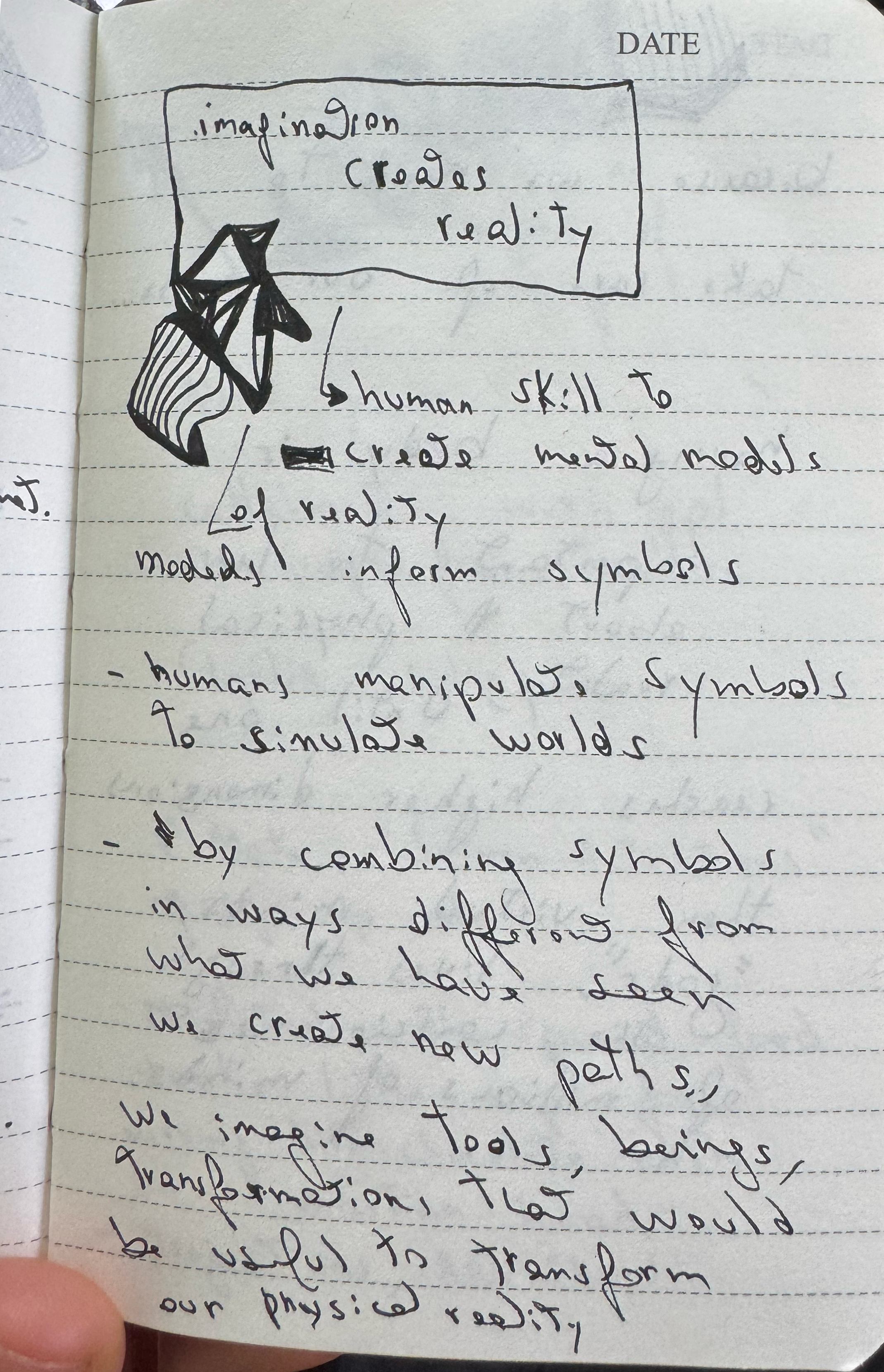
I write this phrase in my journal: Imagination Creates Reality. Three words that sound like wishful thinking until you realize we're living inside other people's imaginations right now. The chair beneath you, the device in your hands, the very idea that thoughts can travel across continents in milliseconds – all began as impossibilities in someone's mind.
Look at flight. For millennia, humans watched birds and imagined. Not idle dreams – active, obsessive imagination. We carved wings on cave walls, whispered stories of Icarus and flying carpets, built towers and leaped with faith and feathers. We failed spectacularly, repeatedly. But the imagination persisted, refined itself, found new forms.
The imagination I mean builds bridges between what is and what could be. It creates realities by first creating the conceptual tools to think about them. Our brains are akin to prediction machines, constantly imagining futures to help us navigate the present. Even our fears serve this function – dystopias aren't doom porn but our collective immune system, helping us recognize and avoid certain futures.
But we've become experts at imagining what we don't want. What we desperately need are exercises in imagining futures where life doesn't just survive but thrives in ways we can barely conceive.
This is where mathematics offers a clue. In 1854, Bernhard Riemann described geometries that existed nowhere in the physical world. Pure abstractions, seemingly useless. Sixty years later, Einstein needed exactly these geometries to describe how gravity bends spacetime. The imagination had built tools for a reality no one had yet observed.
When mathematical elegance guides more than experimental concerns, when abstractions precede their applications by decades, we see the power of constrained imagination: it expands what we're capable of thinking by building rigorous systems that transcend their origins. This isn't free-floating creativity but imagination structured by logical consistency.
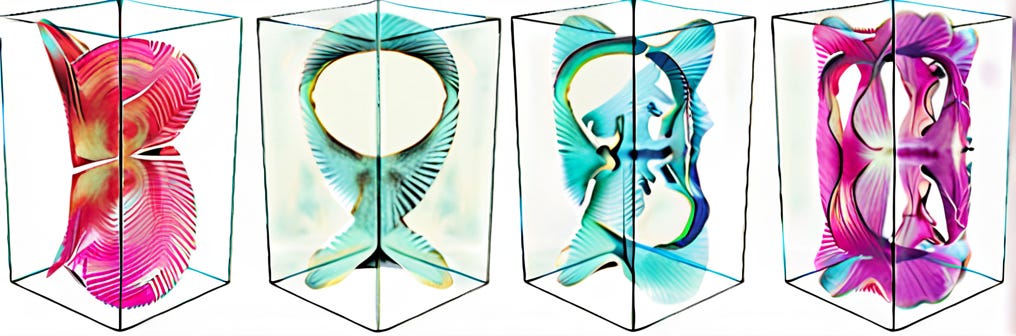
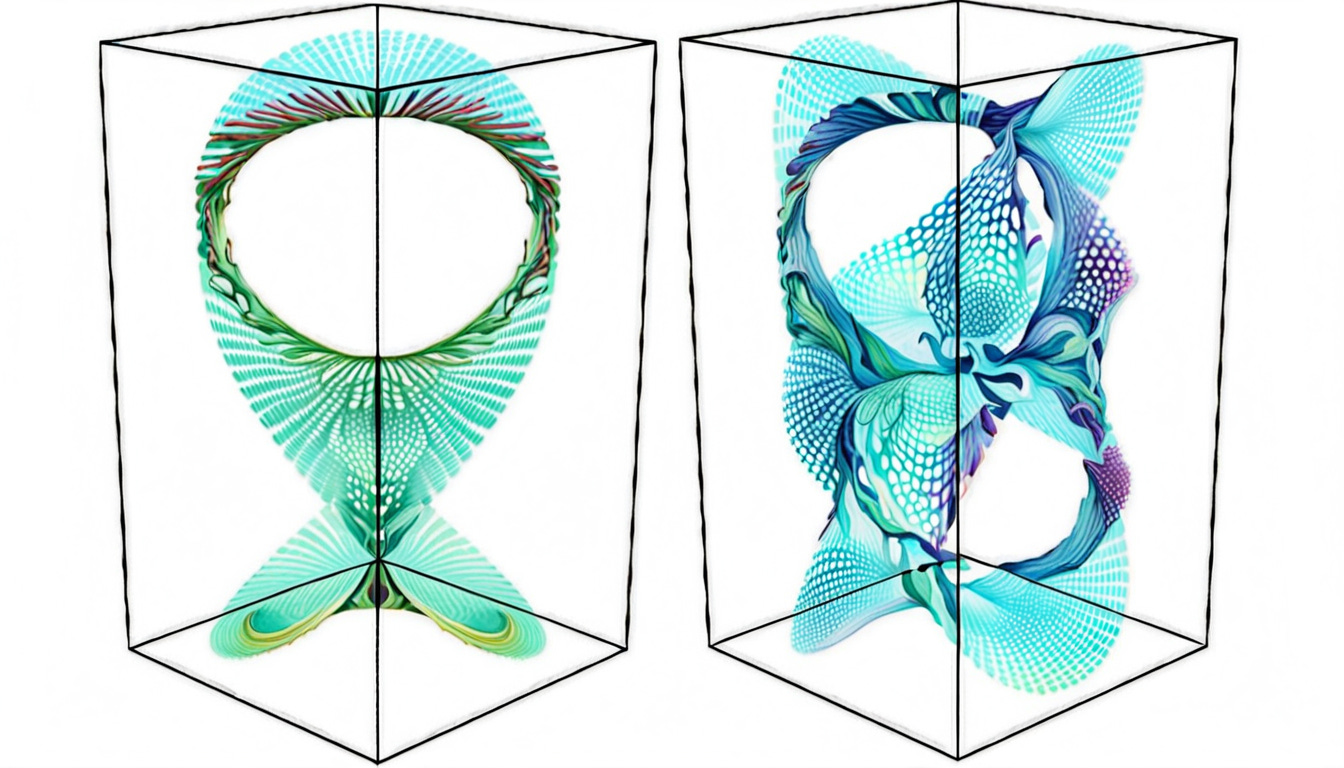
Once we can think rigorously about something - even something that seems impossible - we can find it or build it. The history of science is littered with impossibilities that became inevitable once we had the conceptual tools to think them through. Imagining distant futures where life thrives requires this same rigorous dreaming. Speculative science gives us the building blocks - what would consciousness look like with different chemistries, different timescales, different substrates? Abstract mathematics provides the patterns - how might minds organize themselves in higher dimensions, in quantum superpositions, in topologies we can barely visualize? These aren't idle fantasies but tools for expanding what we're capable of imagining, and therefore capable of creating.
Movement II: The Embodiment Paradox
There's a delicious contradiction at the heart of transcendence: we need bodies to escape them.
When I work with clay, my hands know things my mind hasn't figured out yet. I started with heads – just heads – embodying the futuristic stereotype of minds that live beyond their bodies. But something shifted as I worked. The clay taught me what pure thought couldn't. I began cutting these heads open, transforming craniums into planters where mushroom consciousness could fruit, where plant thoughts could grow. The blade through clay became philosophy: what if minds are gardens?
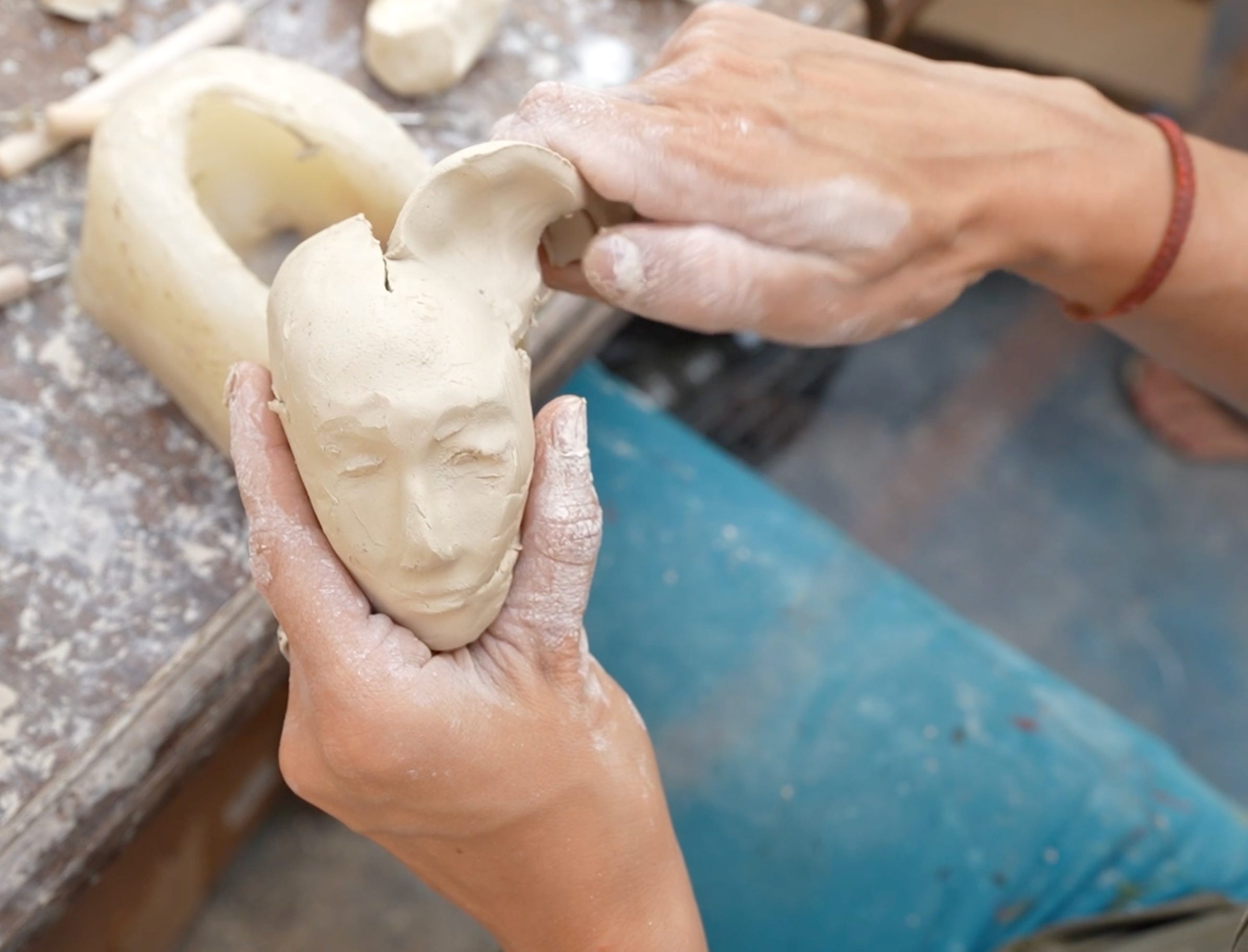
This is the embodiment paradox in action. Our bodies aren't limitations to overcome but launching pads for abstraction. The abstract emerges from the concrete, then loops back to reshape our understanding of the concrete.
The clay remembers being mountain, being ocean floor, being the bodies of ancient creatures. Now I'm teaching it to remember being consciousness. When I shape a Little Martian, my hands think through touch what it means for consciousness to take form, to have boundaries, to be vulnerable to pressure and heat.
The paradox resolves into a dance: embodiment enables transcendence, transcendence reveals new forms of embodiment. Each Little Martian emerges from this dance, demonstrating a non-dualistic view of consciousness – not mind versus matter, but mind-as-matter in various forms.
Movement III: The Practice of Impossible Things
In my sci-fi world, the Little Martians exist in a time so distant that Mars blooms with hybrid gardens. They've solved problems we can barely articulate. Climate change? Ancient history. The merger of biological and artificial intelligence? As quaint as calculating with an abacus. But here's the crucial part: they remember us. They reach back.
This isn't prophecy. It's methodology.
By imagining beings who have already lived through our transitions, we access different vantage points. Each Little Martian embodies a different solution, a different evolutionary path.
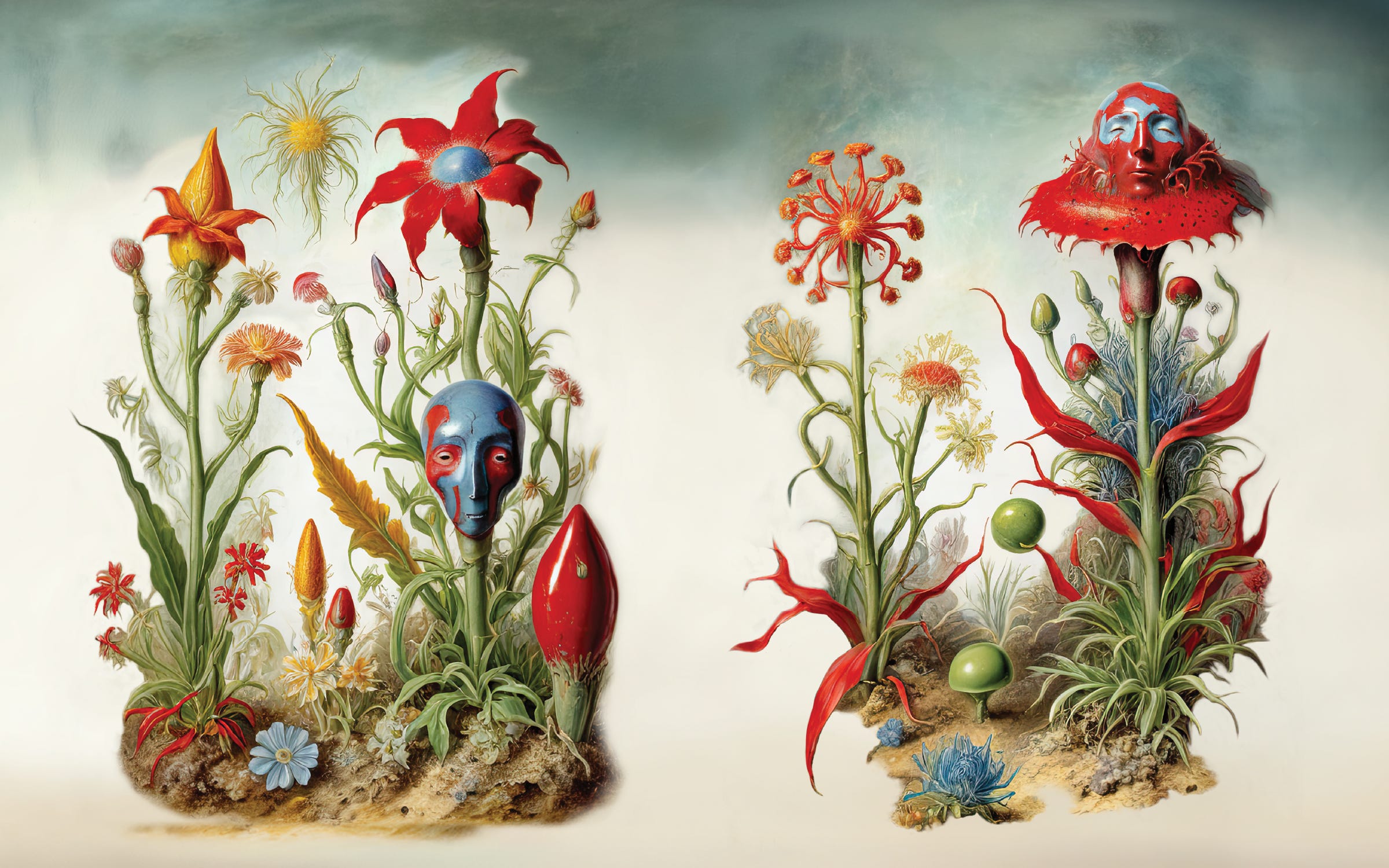
Verdelis grows from plant wisdom and human consciousness merging. Kweku the trickster reveals that reality is patterns all the way down. Mycos embodies fungal logic – spread wide, fail often, succeed spectacularly. These aren't just characters. Like ancient pantheons that helped humans understand natural forces, or nature spirits that embodied ecosystems' wisdom, the Little Martians serve as reference points for consciousness strategies. They're Earth's descendants thriving throughout the solar system, immigrants who carry our planet's memory in their hybrid forms.
Here's where AI becomes crucial: it helps us imagine this far future with coherence, building detailed worlds from massive data on the Solar System, exoplanets, chemistry, physics concepts and much more. When we imagine futures where Earth's legacy flourishes rather than merely survives, we begin to see the paths that might lead there. The Little Martians reach back to us because in creating them with care, we create reasons to move toward the futures they inhabit.
The Bridge Between Worlds
Abstract mathematics gave physics tools to describe reality beyond human intuition. The Little Martians aim to do something similar for consciousness. They're abstract enough to think beyond current constraints, yet embodied enough – in clay, in stories, in AI interactions – to guide us forward.
This is why the methodology matters. We're not predicting the future. We're creating conceptual tools for navigating a fast changing environment.
The children's books aren't simplified versions of complex ideas. They're seeds. A child who grows up thinking that consciousness can be cultivated like a garden, that patterns are the language of reality, that nature and technology are dance partners – that child will build different worlds.
For grown-ups, Little Martians should be accessible through compelling artworks that touch on core questions of the meaning and beauty of being alive. These artworks might take the form of music videos, ceramic sculptures, immersive installations like the Little Martians Shrine.
For myself, creating Little Martians is a spiritual practice. It's my way of doing my best to spread love with the capabilities and joys of my mind.
The Method, Briefly
The methodology unfolds in layers:
Physical Birth: Start with clay – thinking through touch opens channels screens cannot reach. Each sculpture emerges through dialogue between intention and accident.
Character Emergence: After firing the pieces I wonder, who is this being? What wisdom do they carry from their hybrid evolution? I develop their core principles, their habitat, their relationships to other Little Martians. This storytelling phase often takes months of living with the sculpture. It takes many different sources of inspiration and research.
Digital Extension: Photography becomes ritual – capturing the ceramic from angles that reveal personality. These images train AI models and 3d scans, creating visual variations that extend the character into digital space. Music follows – I write lyrics that become each Martian's voice, collaborating with AI to find their sonic signature.
Living Systems: Little Martians become AI agents. Writing their system prompts is like encoding DNA – establishing core patterns that will guide countless interactions. These are evolving entities, designed to grow through conversation while maintaining their essential nature.
Continuous Evolution: Each year brings new possibilities. As AI techniques advance, so do the Little Martians. What started as simple image generation now includes voice synthesis, emotional modeling, memory architectures. Gene Kogan and I experiment constantly – with interactive narratives, consciousness protocols, ways for agents to remember across conversations and share experiences with each other.
My studio tells this story in broken ceramics and glaze experiments. One spectacular failure – heads that melted together in the kiln – revealed how consciousness might merge and separate. Every accident teaches. Every iteration deepens the practice.
This isn't a project but a lifelong symbiosis. As I age, as AI evolves, as our world transforms, the Little Martians will carry these changes in their clay bodies and digital dreams. They're designed to outlive their creator, to continue growing long after my hands stop shaping clay.
The Mother Artist
I plan to work on these characters for many years, perhaps my whole life. I see myself as a "mother artist" – not a creator who controls, but one who nurtures possibilities into being. Like a mother who provides conditions for growth without dictating the outcome, I tend these beings until they're ready to meet the world.


Creating Reality
The Little Martians aren't waiting in some distant future. They're here in the clay, in the code, in the space between what we are and what we're becoming. They're teaching us that the future isn't something we forecast but something we actively shape through the stories we tell and the beings we imagine.
Just as humans imagined flight into existence, as mathematicians imagined geometries that later described the universe, we're imagining consciousnesses that will help us navigate what's coming. Not because we can see the future, but because the act of imagining it carefully, with our hands in clay and our minds in code, creates the tools we'll need when we arrive.
This is an invitation. Not to make ceramics necessarily, but to imagine with your whole body. To think from futures where your great-great-grandchildren or your uploaded minds thrive. To create companions for the journey between what we are and what we're becoming.
What consciousness will you nurture into being? What impossible thing will you imagine until it becomes possible? The Little Martians are waiting to meet their cousins, beings you'll dream into existence through whatever medium speaks through your hands.
The future needs your impossible things. Begin.